
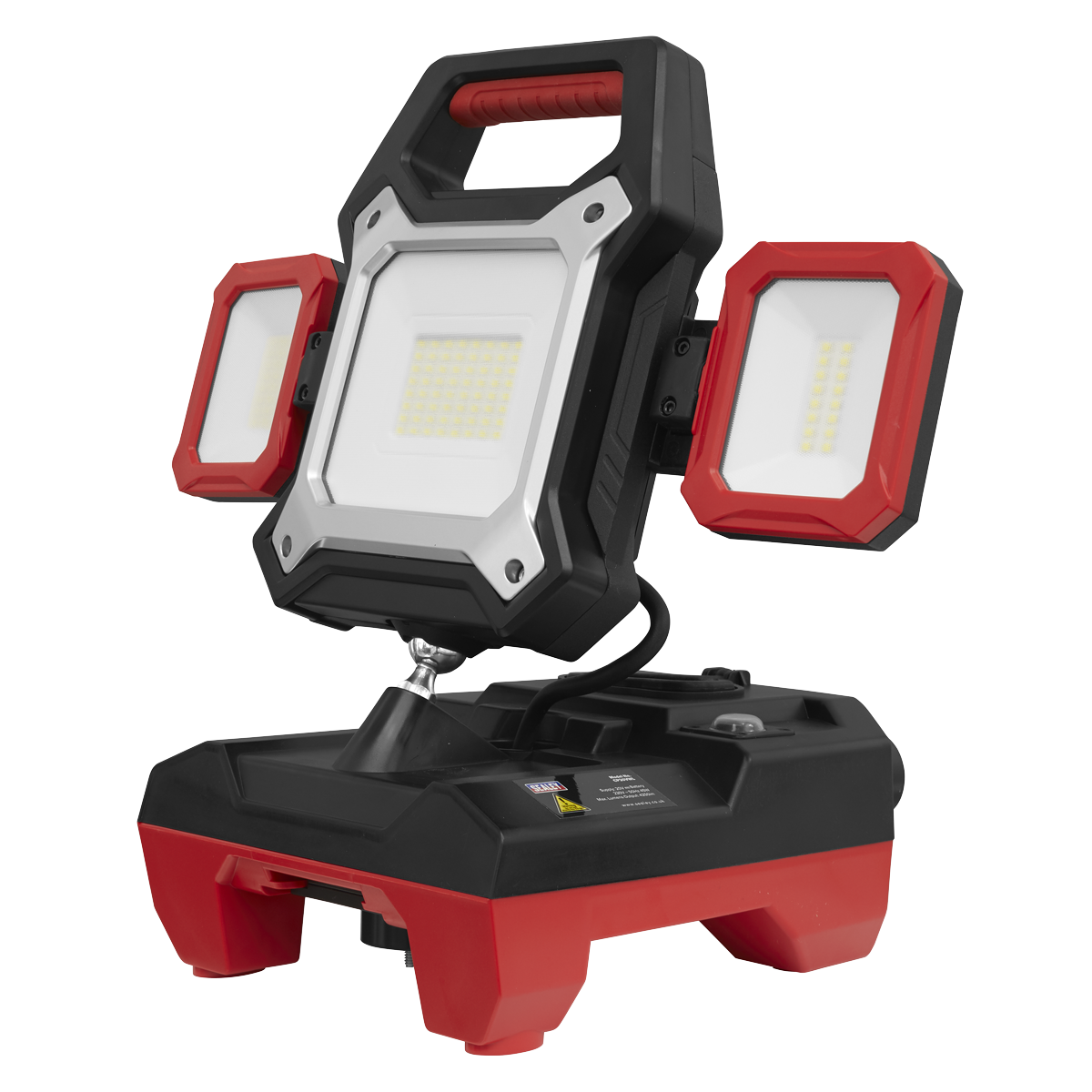
Good workshop lighting is not achieved by buying the highest-lumen lamp available. Vehicle repair creates deep shadows, reflective surfaces, narrow inspection areas, and tasks that range from general movement to paint inspection and detailed electrical work. A useful lighting plan combines ambient lighting with movable task and inspection lights.
Think in layers: ambient, task, and inspection lighting
- Ambient lighting: fixed overhead lighting for safe movement and general work.
- Task lighting: concentrated light at benches, machines, wheel areas, and service bays.
- Inspection lighting: portable or directional lighting for engine bays, underbodies, interiors, paint surfaces, and component inspection.
Trying to make one fixture perform all three jobs often creates glare in one area and shadows in another.
Lumens do not tell the whole story
Lumens describe total light output. What matters at the work surface is how much light reaches the area and how evenly it is distributed. Beam angle, mounting height, distance, reflectivity, and obstructions all affect usable illumination. For a permanent installation, compare the required illuminance for the tasks being performed rather than selecting fixtures only by total lumen output.
Control shadows around vehicles
Overhead lights can be blocked by an open hood, raised vehicle, technician, lift post, or tool cart. Add side or movable light sources so critical work is not dependent on one direction. Under-vehicle tasks benefit from low-position or magnetic lights that can be aimed without resting on the floor.
Beam pattern: flood versus focused light
A wide flood beam is useful for lighting a bay or large work area. A narrower beam can be better for inspection at distance or into a specific cavity. Many workshop lights prioritize a broad, even flood pattern because it reduces harsh hot spots during close work.
Color temperature and color rendering
Color temperature affects the visual appearance of the work area, while color rendering describes how accurately colors appear under the light. Good color rendering is valuable when identifying wiring colors, fluid contamination, paint differences, surface defects, and component markings. For bodywork or color-critical inspection, check the fixture’s published CRI and the needs of the process rather than relying on a generic “daylight” label.
Corded or cordless
- Corded: suited to long-duration work where uninterrupted runtime matters.
- Cordless: easier to position around vehicles and eliminates a trailing mains cable.
- Hybrid corded/cordless: useful where the same light needs portability for inspections and continuous operation for longer jobs.
For cordless lights, compare runtime at each brightness setting, charging time, battery capacity, and whether the light uses the same battery platform as other workshop tools.
Mounting options make a major difference
Look for mounting features that match real work: magnetic bases, hooks, folding stands, tripod sockets, clamps, articulating heads, or under-hood mounts. A bright light that cannot stay aimed at the work quickly becomes frustrating. Magnets should only be used on stable ferrous surfaces where they cannot release and damage the vehicle.
Durability and environmental rating
Workshop lights are exposed to impacts, oil mist, dust, moisture, dropped tools, and frequent transport. Check housing construction, lens protection, cable quality, and any stated ingress-protection rating. An IP rating applies only to the conditions covered by that specific rating; it does not automatically make a light suitable for every wet, dusty, or chemical environment.
Heat, fuel, and hazardous locations
A normal workshop LED light is not automatically approved for use in a potentially explosive atmosphere. Areas with flammable vapor, fuel handling, solvent use, spray operations, or combustible dust can require specifically certified equipment and operating procedures. Use only lighting rated for the classified environment when such a hazard exists.
Glare and reflection
Highly reflective body panels, polished metal, screens, and wet surfaces can produce glare. Diffused worklights and multiple lower-output sources can be more comfortable than one extremely bright point source. Adjustable brightness is useful when moving between large areas and close inspection.
Portable light runtime
Published runtime normally depends on brightness level and battery capacity. Consider whether a light needs to cover a short inspection, a complete repair, or a full shift. Interchangeable batteries can be more useful than a long claimed runtime if spare charged batteries are already part of the workshop system.
Plan the service bay
Map common shadow areas before adding fixtures: between lift posts, beneath raised vehicles, behind open hoods, inside wheel arches, around workbenches, and near diagnostic stations. Permanent overhead lighting should create a reliable baseline; portable lighting should solve the task-specific gaps.
Workshop lighting checklist
- Lighting is planned for ambient, task, and inspection use.
- Beam pattern suits the working distance and area.
- Shadow zones around lifts and vehicles are addressed.
- Color rendering is adequate for inspection tasks.
- Corded or cordless power suits the expected runtime.
- Mounting options keep the light securely aimed.
- Housing and ingress protection suit the environment.
- Brightness can be controlled to reduce glare.
- Any hazardous-location requirement is identified before use.
Share:
Buyer’s Guide: Choosing a Transmission Jack
Vehicle Lifting Equipment for Workshops: How to Choose the Right Setup