
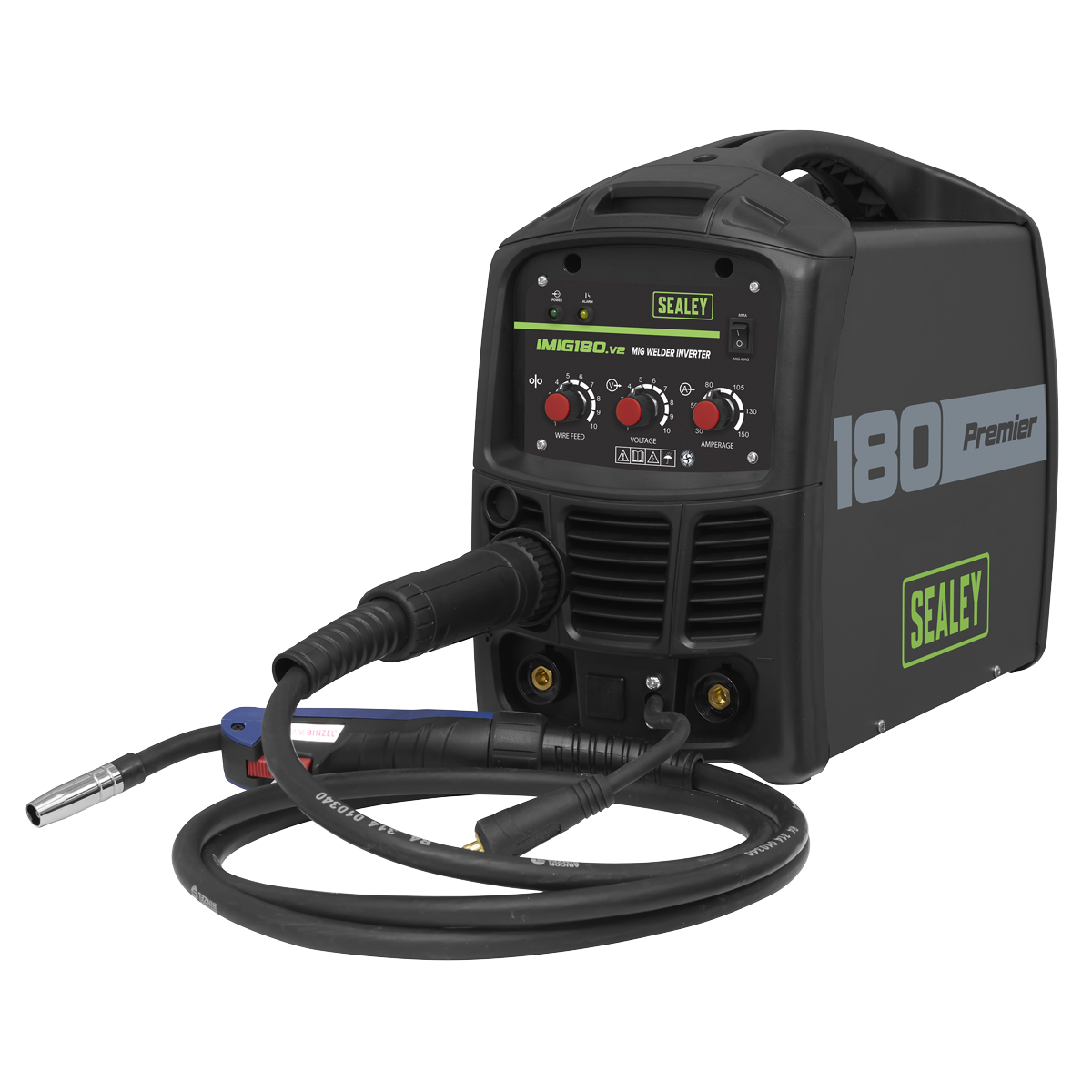
MIG and ARC welding can both be useful in an automotive or fabrication workshop, but they solve different problems. The better choice depends on the material, joint preparation, working environment, required finish, portability, electrical supply, and how much welding the machine will perform in a shift.
What MIG welding is best at
MIG welding uses a continuously fed wire electrode. Conventional gas-shielded MIG uses an external shielding gas, while some machines can also use suitable flux-cored wire for gasless operation. In a controlled workshop, MIG is popular because it can provide fast deposition, relatively clean welds, and good control on thin to medium material when the machine, wire, gas, and settings are correctly matched.
Common workshop reasons to choose MIG include fabrication, brackets, panels, exhaust work where the material and process are appropriate, general steel repair, and repeated production-style welding where speed matters.
What ARC or stick welding is best at
ARC welding in this guide refers to manual metal arc (MMA or stick) welding. A flux-coated electrode supplies both filler metal and shielding. There is no separate gas cylinder, which makes the setup portable and less sensitive to wind than gas-shielded MIG.
Stick welding is often useful for repair work on thicker steel, outdoor work, site work, and jobs where the surface cannot be prepared to the same standard as clean fabrication material. Electrode selection still matters, and heavily contaminated metal should be cleaned whenever practical.
Material thickness and control
For thinner automotive sheet, the ability to control heat input is critical. A suitable MIG setup is generally easier to use for short, controlled welds on thin material than a typical stick process. For thicker structural steel and repair work, stick welding can be efficient and robust. Always use the machine’s stated output range and a welding procedure suitable for the material and joint.
Surface condition
MIG performs best on properly prepared, clean metal with good electrical contact. Rust, scale, paint, coatings, oil, and contamination can destabilize the arc and create defects. Stick electrodes can tolerate some less-than-perfect field conditions better, but that is not a reason to weld over hazardous coatings or avoid proper preparation.
Indoor workshop or outdoor repair
Shielding gas can be blown away by drafts and wind, which can compromise a gas-shielded MIG weld. In a controlled indoor bay this is manageable. For outdoor or mobile repairs, stick welding—or an appropriate flux-cored process—can be more practical.
Speed and learning curve
Once correctly set, MIG’s continuous wire feed can make repeated welding faster and reduce electrode changes. It is often more approachable for operators learning consistent travel speed and torch angle. Stick requires manual control of electrode length as the rod burns down and generally creates slag that must be removed between passes.
Portability and consumables
- MIG: machine, torch, wire, contact tips, drive components, and usually shielding gas equipment.
- ARC/MMA: power source, electrode holder, earth lead, and packaged electrodes; no separate shielding-gas cylinder is normally required.
A compact inverter can make either process easier to move, but check the machine’s actual input current and generator compatibility before assuming it is suitable for mobile power.
Output range and duty cycle
Do not compare welders only by their maximum amp figure. Check minimum output, adjustment range, duty cycle at useful current levels, cooling system, and the thickness range stated by the manufacturer. A machine that briefly reaches a high current can still be unsuitable for sustained fabrication if its duty cycle is low.
Electrical supply
Confirm supply voltage, plug type, circuit capacity, and any dedicated-circuit requirements. Higher-output machines can exceed a standard branch circuit. Long or undersized extension leads can cause voltage drop and overheating. Follow the welder manufacturer’s electrical requirements.
Gas, wire, and electrode selection
The filler material and shielding system must match the parent metal and welding procedure. For MIG, check supported wire diameters, spool sizes, polarity requirements, torch type, and whether gasless flux-cored wire is supported. For stick, confirm electrode types and diameters supported by the machine’s output range.
Multi-process machines
A MIG/MMA or MIG/MMA/TIG machine can be attractive where one bay handles varied work. Multi-process capability does not mean every process has identical performance or accessories. Check what is actually included, the torch and lead connections, polarity changes, gas equipment, and whether optional accessories are required.
Safety and ventilation
Both processes create intense ultraviolet radiation, hot metal, sparks, fumes, and fire risk. Use suitable welding PPE, screens, extraction or ventilation, and fire controls. Remove flammable materials from the area. Coated, galvanized, painted, plated, or contaminated metals can produce hazardous fumes and require specific controls. Never weld tanks, containers, or components that may contain flammable residues without an appropriate professional procedure.
Which process should a workshop choose?
- Choose MIG when clean workshop fabrication, speed, thin-to-medium material control, and repeated welds are the main priorities.
- Choose ARC/MMA when portability, outdoor work, thicker repair steel, simple consumables, or less controlled site conditions matter more.
- Choose a multi-process machine when both workflows are genuinely required and the machine meets the electrical, output, and duty-cycle needs of each process.
Share:
Buyer’s Guide: Choosing an Air Compressor for a Workshop
Buyer’s Guide: Choosing a Transmission Jack