
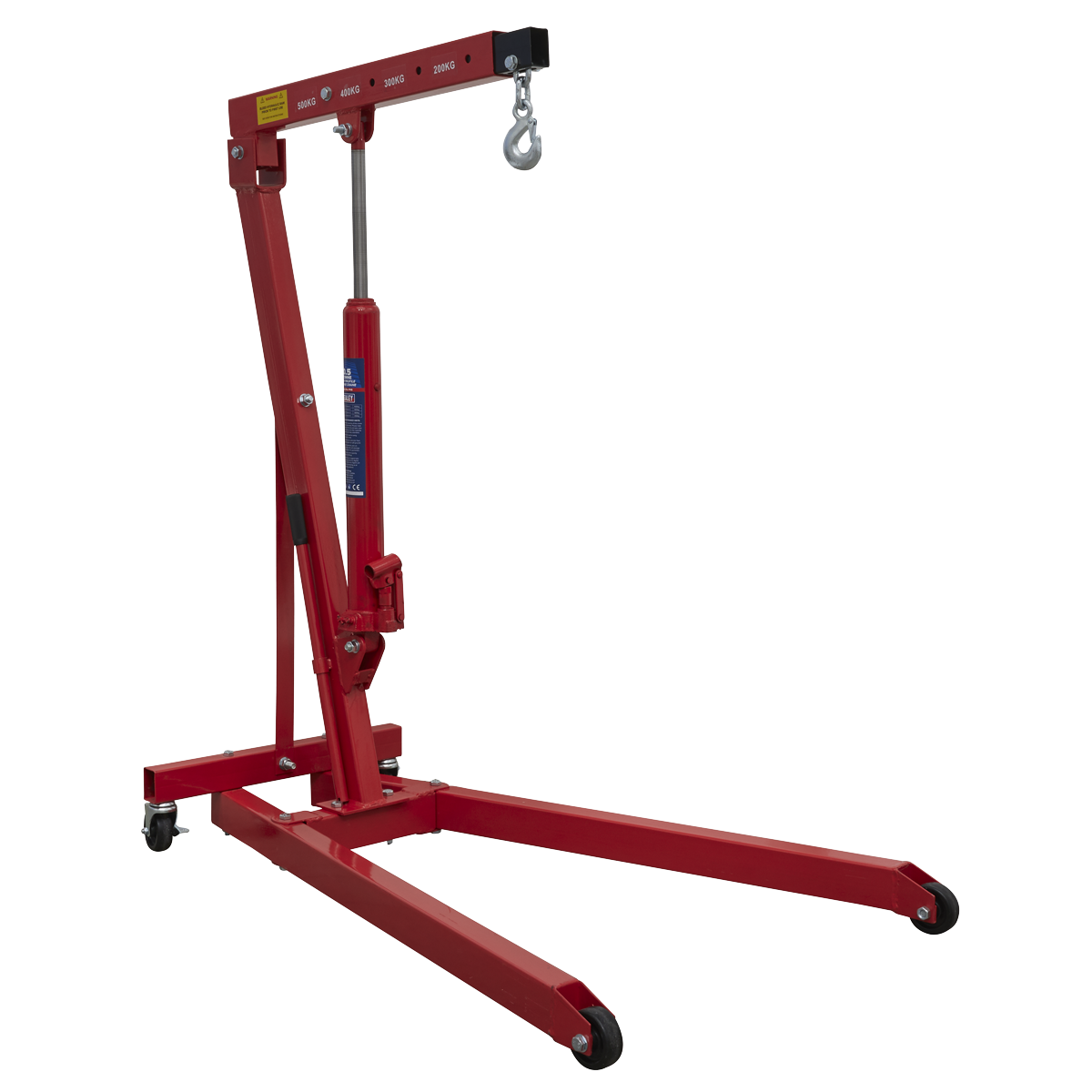
An engine crane is one of those workshop tools that needs to be right when the job becomes heavy. It is used to lift and position engines and other suitable components, so capacity, geometry and stability are more important than simply finding a crane that fits in the corner.
Know the load before you lift
Choose a crane with a rated capacity suitable for the components you intend to handle. Remember that many folding engine cranes have different capacities at different boom-extension positions. Check the manufacturer's load chart rather than assuming the headline maximum applies at every reach.
Check boom reach
The boom must reach the lifting point while the crane's legs remain correctly positioned. Engine bays vary considerably, so compare the crane's boom positions and dimensions with the vehicles most commonly serviced in your workshop.
Minimum leg height can decide whether the crane fits
Low-profile legs are useful where the crane needs to slide beneath a low vehicle, subframe or workshop equipment. Measure available clearance rather than relying on appearance alone.
Think about hook height and working range
The crane needs enough vertical range to clear the engine bay and position the component safely. Workshop ceiling height can also matter, particularly around raised vehicles, lighting or overhead services.
Manoeuvrability is part of the job
An engine crane is moved while unloaded and positioned around vehicles, benches and other equipment. Castor condition and floor quality therefore matter. Keep the intended route clear and avoid trying to roll a loaded crane over obstacles or unsuitable surfaces.
Folding designs save space
For workshops where an engine crane is not used every day, a folding chassis can reduce the storage footprint. Check how the crane folds, whether it remains stable when stored and how easily it can be returned to working configuration.
Use suitable lifting accessories
The crane is only one part of the lifting system. Chains, slings, load levellers and attachment points must be suitable for the load and used according to their instructions. Do not substitute improvised lifting accessories.
Inspect before use
Check the hydraulic system, boom, fasteners, hook, castors and frame for visible damage or leaks. Confirm that adjustment pins and retaining devices are correctly installed. Follow the manufacturer's maintenance and operating guidance.
The right engine crane should fit your vehicles, loads and workshop floor plan while leaving a sensible margin within its rated operating conditions. DJM Direct supplies engine handling and lifting equipment for automotive workshops.
Share:
Jump Starters and Battery Support: A Practical Workshop Buying Guide
Pressure Washers for Garages: Choosing Power Without Overbuying