
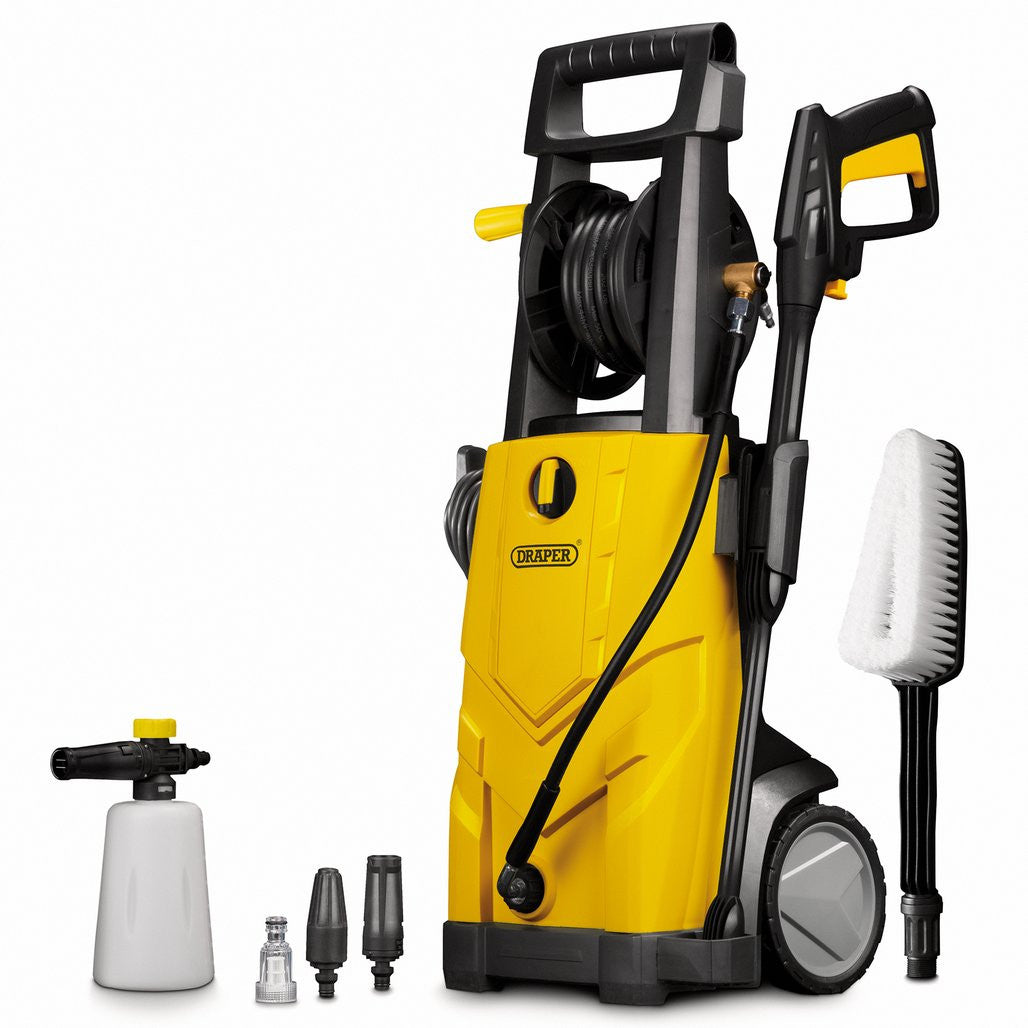
A pressure washer can handle everything from vehicle cleaning to workshop yards, equipment and hard surfaces. But higher pressure is not automatically the best choice. A useful machine balances pressure, water flow, control and accessories for the surfaces you actually clean.
Pressure and flow do different jobs
Pressure helps break the bond between dirt and the surface. Water flow helps carry that dirt away. When comparing machines, consider both figures rather than focusing on bar rating alone. Two pressure washers with similar maximum pressure can feel very different if their flow rates and nozzle systems differ.
Match the machine to the cleaning task
For general vehicle and equipment cleaning, controllability is important. Delicate paint, trims, seals and electrical components require more care than a concrete yard. Use the appropriate nozzle, distance and pressure for each surface and follow the vehicle or equipment manufacturer's cleaning guidance.
Motor power and supply
Check the electrical requirements before buying. A workshop pressure washer needs a suitable power supply and safe cable arrangement in an environment where water is present. Keep electrical connections and extension arrangements consistent with the manufacturer's instructions.
Hose length affects real-world convenience
A machine with adequate hose reach can stay in one position while the operator works around a vehicle. Too little reach leads to constant repositioning, while poor hose management creates unnecessary clutter. Look at hose length, storage and reel options as part of the specification.
Accessories can make one machine more versatile
Different lances, brushes, detergent systems and surface-cleaning attachments can expand what the pressure washer can do. Buy accessories for real tasks rather than accumulating fittings that will remain unused.
Total-stop systems can improve everyday operation
On machines equipped with a total-stop feature, the motor can stop when the trigger is released rather than running continuously. Check the exact operation described by the manufacturer and consider how it fits frequent start-stop workshop cleaning.
Plan for drainage and overspray
Pressure washing moves large amounts of water and contamination. Choose a cleaning area with suitable drainage and control overspray around tools, electrical equipment and customer vehicles. Local environmental and waste-water requirements should be considered for commercial cleaning operations.
Maintenance keeps performance consistent
Inspect hoses, connectors, nozzles and filters regularly. Protect the machine from freezing conditions where applicable and follow the manufacturer's storage and maintenance procedures. Small restrictions or damaged accessories can noticeably reduce cleaning performance.
Choose a pressure washer around the jobs you perform most, then allow reasonable capacity for heavier occasional cleaning. DJM Direct stocks workshop cleaning and automotive equipment for professional garages and workspaces.
Share:
Engine Cranes: What to Check Before Choosing One