
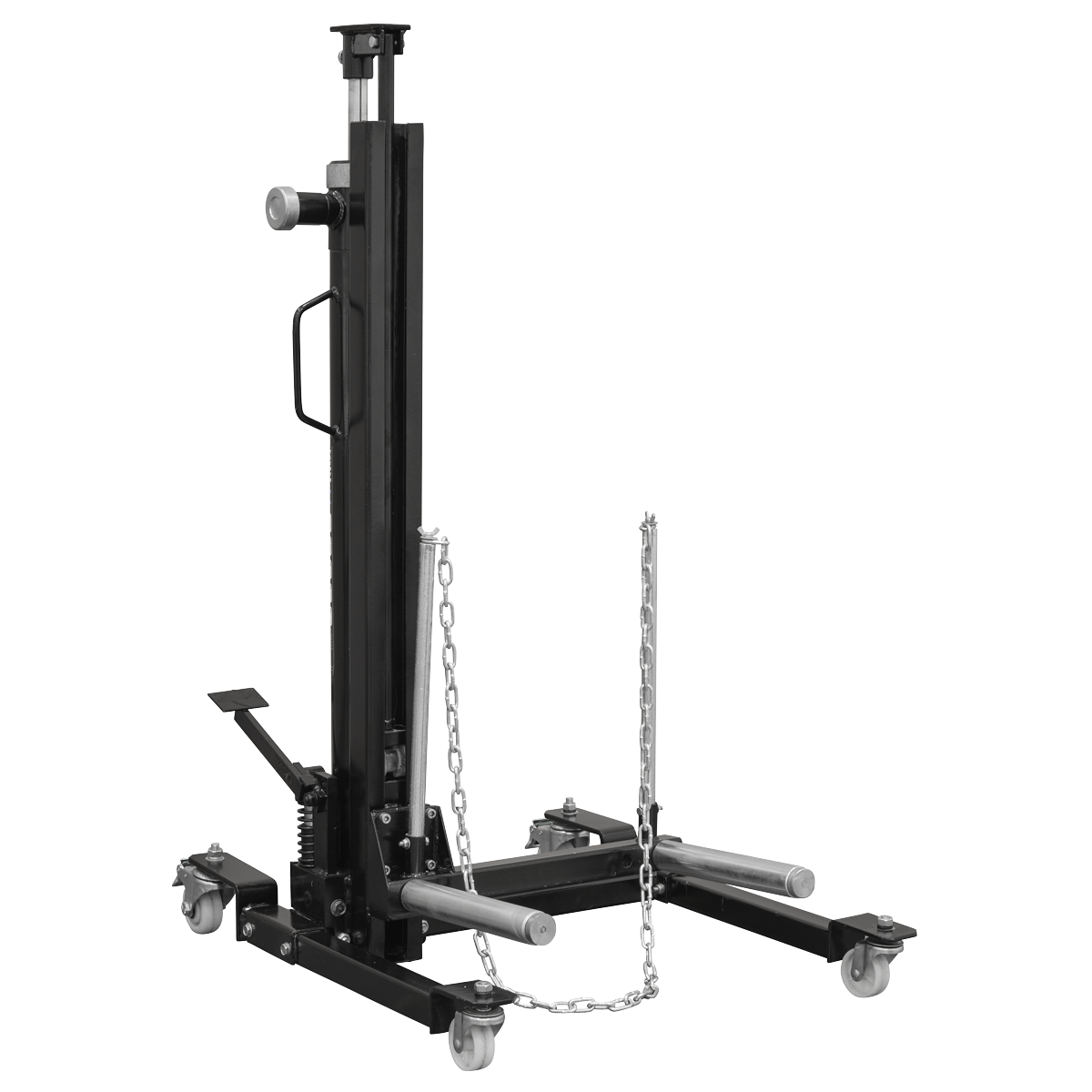
Tyre and wheel work involves more than removing a set of wheel nuts. Modern wheel and tyre assemblies can be large, heavy and awkward to position, particularly on SUVs, vans and commercial vehicles. The right handling equipment can reduce unnecessary manual effort and keep the service bay moving efficiently.
Start with the vehicles you see every day
Consider wheel size, vehicle height and the type of tyre work your workshop performs. A bay handling small passenger cars has different needs from one servicing large SUVs or vans. Equipment capacity and working range should reflect the heaviest and largest routine jobs, not an occasional best-case example.
Wheel lifters reduce manual positioning
A wheel lifter or removal trolley supports the wheel while it is raised, lowered and aligned with the hub. This can be particularly useful for heavier assemblies where repeatedly lifting and holding the wheel by hand is inefficient.
Compare the lifter's rated capacity, maximum working height, roller design and castor arrangement. The unit also needs enough room to move around the vehicle in the bay.
Choose lifting equipment that suits wheel service
For quick brake, suspension and tyre jobs, a suitable trolley jack can provide useful flexibility. Low-entry designs are valuable where vehicles have limited ground clearance. Always use lifting and support equipment in accordance with the manufacturer's instructions and appropriate workshop procedures.
Inflation equipment should be easy to read and control
Tyre inflation is a frequent task, so gauges, hoses and connectors need to be convenient and maintained in good condition. A compact 12V inflator can also be useful for mobile or emergency applications, while fixed workshop air systems support higher-volume work.
Keep air hoses under control
Hoses left across the floor create clutter and are more likely to be damaged. Retractable reels and well-positioned connection points help keep the tyre bay clear while making compressed air readily available.
Plan the bay around movement
Leave enough space for the technician, trolley, removed wheel and tools. A wheel service area becomes inefficient very quickly when removed wheels block access or equipment has no defined parking position.
Inspect handling equipment regularly
Check castors, rollers, hydraulic components, fasteners and contact surfaces for wear or damage. Clean equipment after use and follow the manufacturer's inspection and maintenance schedule.
The goal is a tyre bay where the vehicle, technician and equipment can move without unnecessary lifting or obstruction. DJM Direct supplies wheel handling, tyre inflation and vehicle lifting equipment for professional workshop use.
Share:
Workshop Storage Guide: Build a Cleaner, Faster Work Area
Jump Starters and Battery Support: A Practical Workshop Buying Guide