
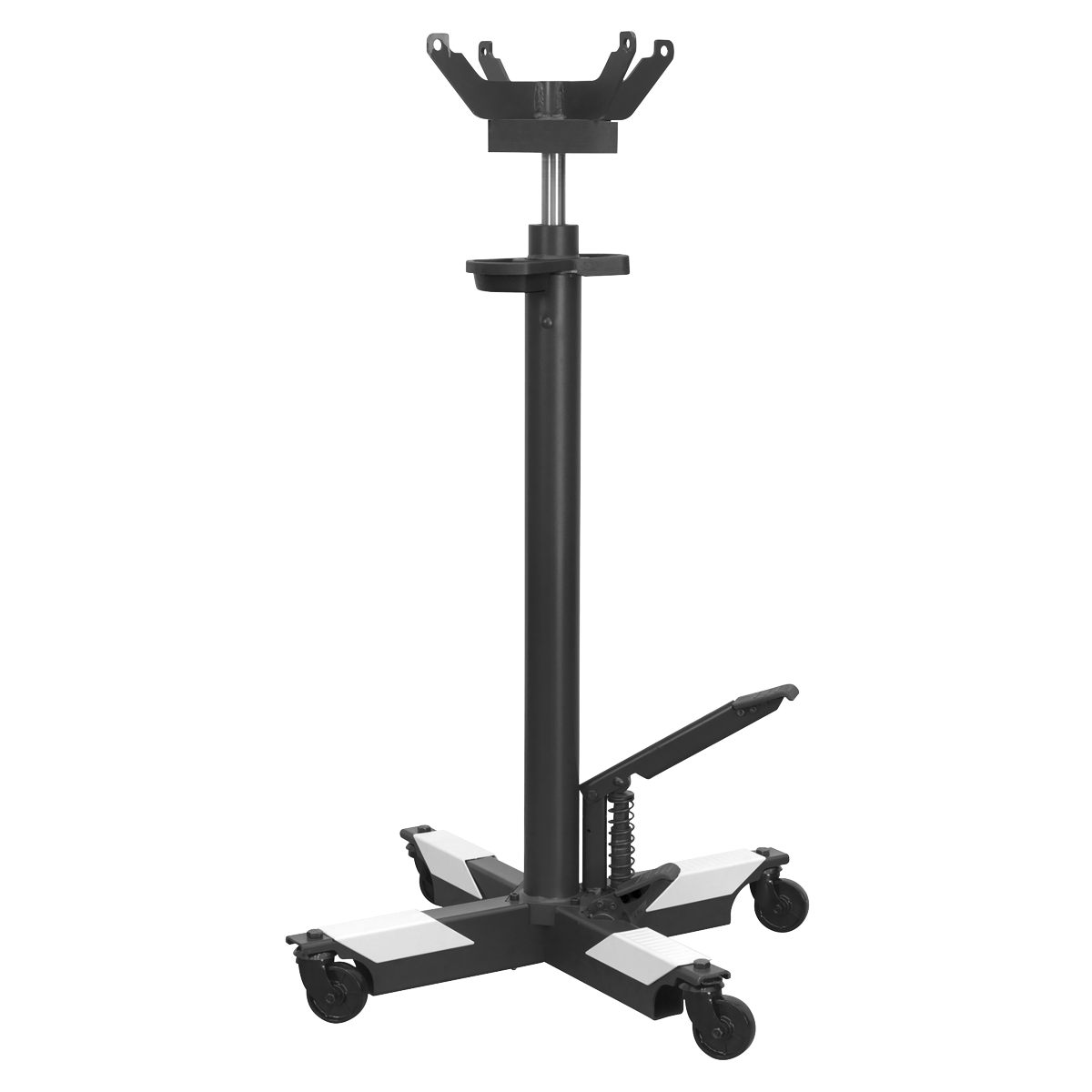
Removing or installing a gearbox is a job where control matters. A transmission jack supports the component while the technician adjusts its position beneath the vehicle, helping make heavy drivetrain work more manageable. Choosing the right jack comes down to more than maximum capacity.
Choose the correct capacity
Start with the transmissions and driveline components your workshop handles. The jack's rated capacity must comfortably cover the intended load. Never estimate a component's weight or exceed the manufacturer's stated limit.
Higher capacity can be useful for heavier commercial work, but buying more capacity than you need can also mean a larger, heavier unit occupying valuable floor space. Match the specification to your real workload.
Check the lifting range
The minimum and maximum saddle heights determine where the jack can work. A vertical transmission jack is commonly used beneath a vehicle already raised on a lift, so its operating range needs to suit both your vehicle lift and the components being removed.
Measure the typical working height in your bays and compare it with the jack's published range before ordering.
Look closely at the saddle
A transmission is rarely a perfectly flat, balanced load. A useful saddle should help the technician support and position the component correctly. Depending on the model, adjustment may include tilt or other positioning features. Securing chains or straps should be used exactly as instructed by the manufacturer.
Stability and manoeuvrability
A wide, stable base helps keep the load controlled while castors allow the jack to be moved into position. These two requirements need to work together. Inspect wheel condition regularly and keep the floor clear of debris that could interrupt smooth movement.
Foot-operated controls can improve workflow
On suitable models, foot-operated hydraulic controls allow the technician to keep both hands available for guiding the component. This can make fine positioning easier during removal and installation, particularly when working alone on routine jobs.
Think about storage
Transmission jacks are tall pieces of equipment, so plan where the unit will live when it is not in use. A defined storage position reduces clutter in active bays and makes daily workshop organisation easier.
Inspect before every use
Before loading the jack, check for hydraulic leaks, damaged castors, loose components and visible damage. Confirm that the saddle and restraints are suitable for the job. Follow the manufacturer's operating and maintenance instructions at all times.
A properly selected transmission jack should fit the loads, lifting height and space available in your workshop. DJM Direct carries transmission and vehicle service equipment for professional automotive environments.
Share:
How to Choose an Air Compressor for a Garage or Workshop
How to Choose an Air Compressor for a Garage or Workshop