
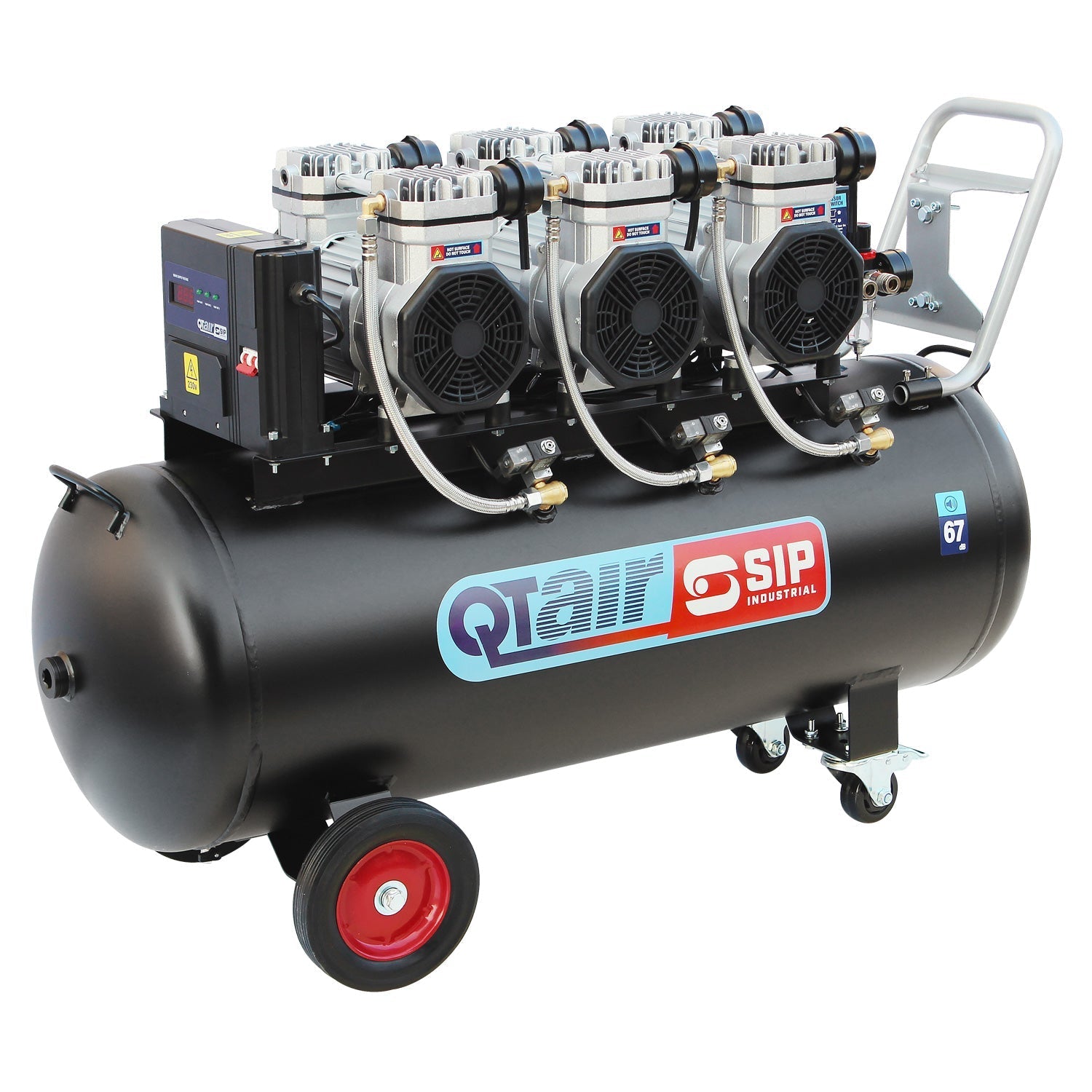
An air compressor can power a large part of a workshop, from impact tools and blow guns to tyre equipment and general maintenance tasks. Choosing one correctly means looking beyond tank size. Air demand, duty cycle, noise and the way air is distributed around the workshop all matter.
Start with airflow demand
Check the air consumption of the tools and equipment you expect to run. The key figure is the airflow required while the tool is working, not simply the compressor's motor power. If several technicians may use air tools at the same time, consider the combined demand rather than a single tool in isolation.
Understand tank size
A larger receiver stores more compressed air and can reduce how frequently the motor cycles during intermittent use. It does not, however, replace adequate compressor output. A large tank connected to a compressor that cannot replenish air quickly enough will still struggle during sustained demand.
For workshop use, choose tank capacity together with airflow and expected duty cycle.
Check working pressure
Make sure the compressor can provide the pressure required by your tools. More pressure is not automatically better; tools should be operated within their specified range. Regulators and correctly sized air lines help deliver consistent pressure at the point of use.
Direct drive or belt drive?
Direct-drive compressors can offer a compact, straightforward package and are available in low-noise and oil-free designs. Belt-drive units are common in workshops with heavier or more sustained air demand. The best option depends on workload, maintenance preferences and available space.
Noise matters more than many buyers expect
If the compressor sits close to working bays, reception areas or neighbouring businesses, operating noise can affect the whole environment. Ultra-low-noise models can be worth considering where the compressor cannot be isolated in a separate plant area.
Plan the air system, not just the compressor
A good compressor can still perform poorly through undersized hoses, excessive pressure drop or a badly planned layout. Consider hose diameter, reel positions, drainage and where technicians actually need connection points. A retractable hose reel can also help keep busy bays organised.
Allow room for servicing and ventilation
Position the compressor according to the manufacturer's clearance and ventilation requirements. Keep access available for inspection, draining and maintenance. Avoid placing equipment where workshop dust or clutter will unnecessarily restrict cooling airflow.
Buy for realistic peak demand
It is sensible to leave some operating headroom, particularly if the workshop is growing, but there is little value in buying capacity that will never be used. Build a list of air tools, estimate simultaneous use and compare that demand against the compressor's published specification.
DJM Direct stocks compressors and pneumatic workshop equipment for a range of professional garage applications.
Share:
Transmission Jacks Explained: Choosing Capacity, Reach and Stability
Transmission Jacks Explained: Choosing Capacity, Reach and Stability