
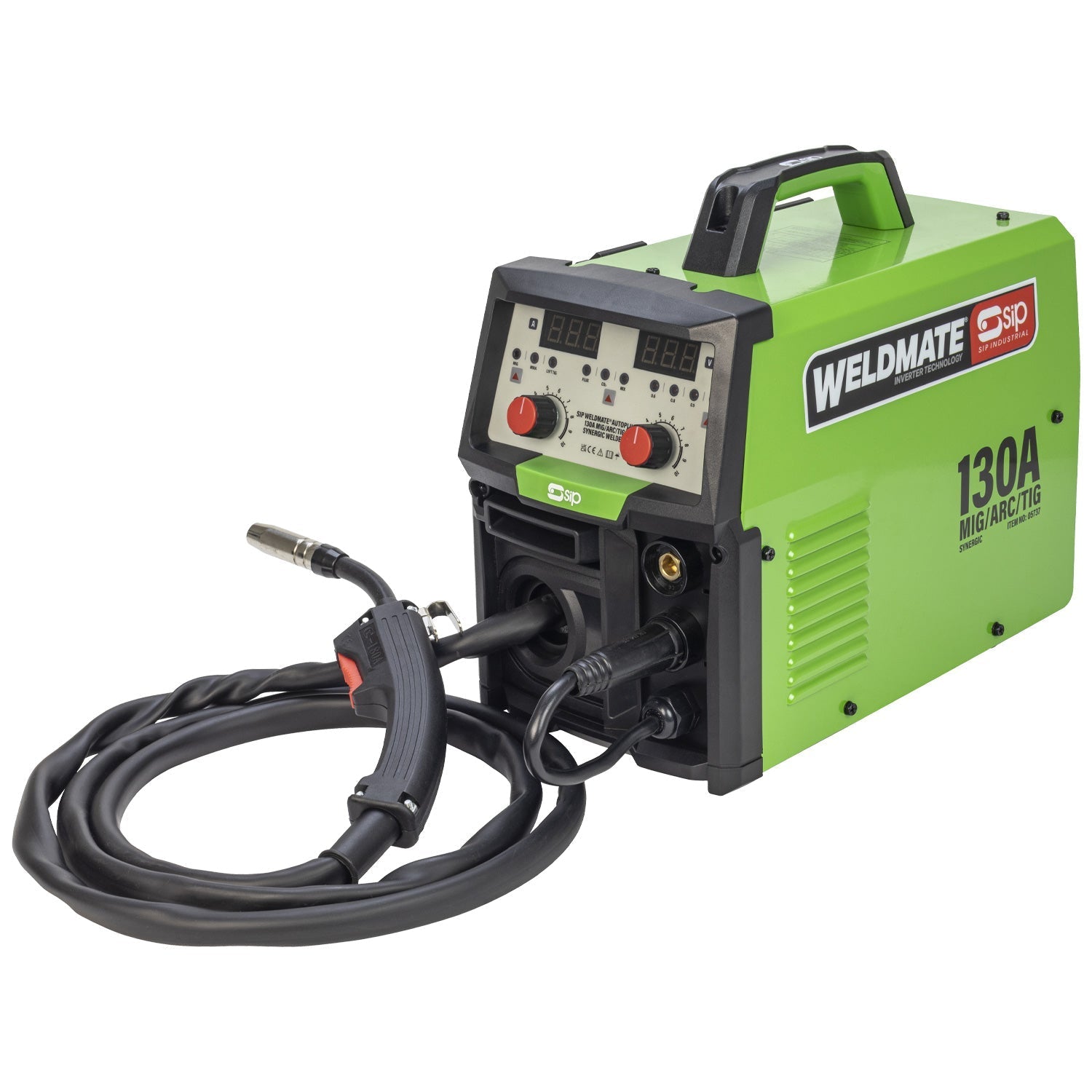
Welding equipment is easier to choose when you start with the jobs rather than the machine. MIG, MMA and TIG processes each have strengths, and multi-process inverter welders can combine several methods in one compact unit. The right choice depends on material, thickness, working environment and the finish you need.
MIG: fast and practical for workshop fabrication
MIG welding is widely used for fabrication and repair because the continuously fed wire supports quick, repeatable work. It can be a practical choice for steel fabrication, brackets, panels and many general workshop tasks when the correct wire, gas and machine settings are used.
Gasless-capable machines can add flexibility for certain outdoor or mobile jobs, although the characteristics and finish differ from gas-shielded MIG welding.
MMA: simple and portable
MMA, often called stick welding, uses a flux-coated electrode and does not require a separate shielding-gas bottle. That makes suitable MMA equipment useful for maintenance, repair and jobs where portability matters. Electrode selection and machine settings need to match the material and task.
TIG: control and clean results
TIG welding is chosen when fine control and finish are priorities. It is commonly associated with precise fabrication and thinner materials, although the exact capability depends on the welder and process configuration. TIG can require more operator skill and is generally slower than MIG for production-style work.
Why consider a multi-process inverter?
A multi-process machine can reduce the number of separate welders needed in a workshop. This is useful when work varies from day to day or floor space is limited. When comparing machines, check exactly which processes and operating modes are supported rather than relying on the word 'multi-process' alone.
Compare output and duty cycle
Maximum amperage is only one part of the specification. Duty cycle tells you how long the machine can weld at a stated output before it needs to cool. A workshop doing repeated fabrication work should compare duty-cycle data at realistic operating currents.
Check the electrical supply
Confirm the machine's input-voltage and supply requirements before purchase. The workshop circuit, plugs and protection should be appropriate for the equipment. Installation and electrical work should follow the manufacturer's instructions and applicable requirements.
Do not overlook extraction and PPE
A complete welding setup includes suitable personal protective equipment, eye and face protection, ventilation or fume control, and a work area kept clear of inappropriate combustible materials. Follow the equipment manufacturer's safety guidance for every process.
For a mixed automotive workshop, the most useful welder is the one that matches the materials and frequency of your real jobs. DJM Direct offers welding and workshop equipment from established tool and equipment brands.
Share:
How to Choose an Air Compressor for a Garage or Workshop
Workshop Storage Guide: Build a Cleaner, Faster Work Area